Dallas County Sees Modest Increase in Young Adults Earning a Living Wage, But Gaps Persist


Newly released data from the American Community Survey 5-year averages, published by the U.S. Census Bureau late last week, show that the percentage of young adults in Dallas County earning a living wage grew from 30.65% in 2023 to 31.45% in 2024 — an increase of nearly one percentage point.
This continues seven years of steady growth on this metric for Dallas County, which in that time has gone from mirroring the statewide average to pulling nearly five percentage points ahead and doubling the state’s rate of growth.

While this progress is encouraging, it also underscores the work still ahead. Less than one-third of young adults in our county are earning a living wage, and longstanding disparities in wage attainment persist. Visit our living wage dashboard to explore these outcomes in further detail.
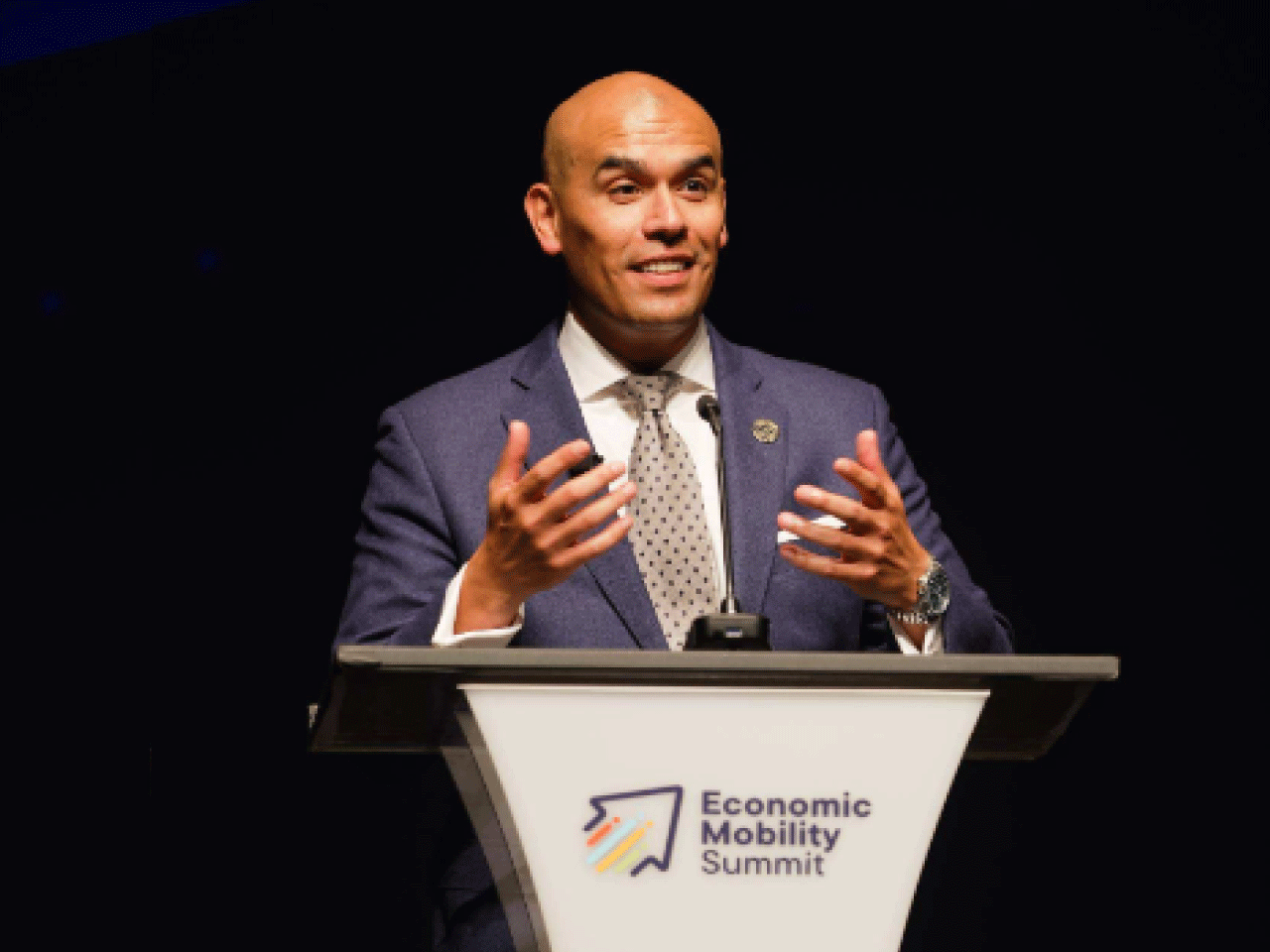
“We are encouraged to see the amount young adults in our community earning a living wage continue to grow,” said Commit President Miguel Solis. “But the data are also clear: far too many of our young people are not yet fully participating in the prosperity of our region. If we want Dallas County to thrive, we must ensure that opportunity is not predicted by race, place or socioeconomic status.”
Commit’s inflation-adjusted living wage threshold for a “one adult-one child” family is set at $62,407 for 2024, the most recent year for which we have census data. Only 22% of Black and 18% of Hispanic young adults met this threshold, compared to 52% of White 25-34 year olds – a much larger gap by race than the statewide averages.

With approximately 80% of Black and 85% of Hispanic Dallas County students currently experiencing economic disadvantage, it is clear we must be intentional about broadening access to economic opportunity if we are to reach our True North Goal: by 2040, at least half of all 25- to 34-year-old residents in Dallas County, irrespective of race, will earn a living wage. The 25-34 year olds of 2040 are currently between the 5th grade and sophomore year of college, highlighting the importance of interventions that will meaningfully impact their public education experience.
By providing high-quality early child care, parents can participate more fully in the workforce today, and children can enter “school-ready” to succeed tomorrow. At the same time, strong college and career advising in high school can ensure students, especially those experiencing economic disadvantage, can graduate ready to enroll in and complete a postsecondary credential that is aligned with high-demand, well-paying jobs.
Our local and state leaders have taken numerous important steps to expand access to both early childhood education and college and career readiness in recent years, resulting not only in growth in living wage attainment but a concurrent reduction in the young adult poverty rate (per the table below, Dallas County young adults living in poverty have declined from roughly 18% to 11%). But it’s clear these efforts must be grown and sustained.

Dallas County has the talent. What we must continue to build are the systems that consistently connect that talent to opportunity.
Latest Learnings



Be a part of the impact



.avif)


