Dallas County Leaders Unite Around Shared Goal: Expanding Economic Mobility

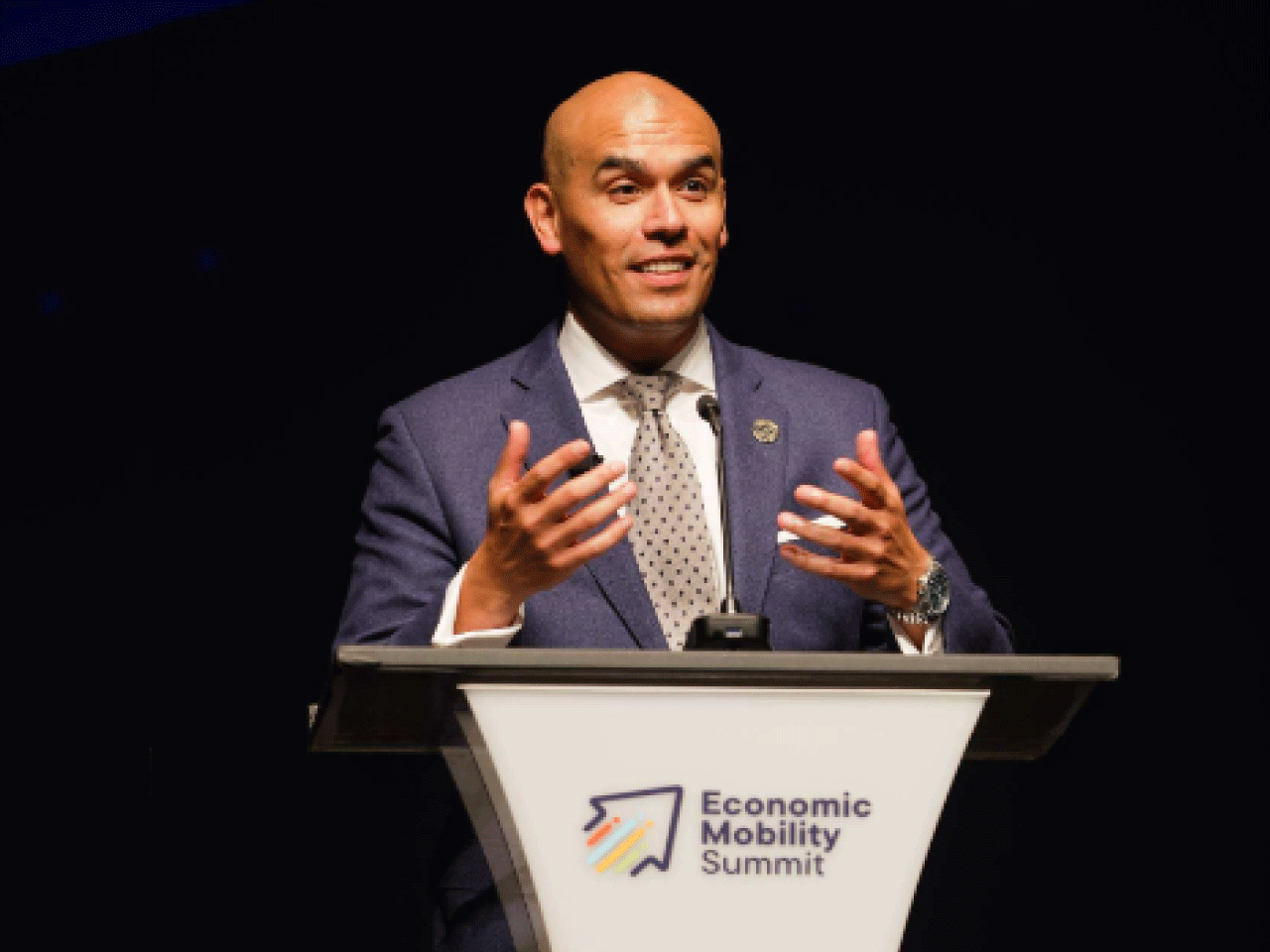
“Tonight is about what we can achieve together when we align around one goal: expanding economic mobility for Dallas County’s young people.”
With those words, Commit Partnership President Miguel Solis opened the 2025 Economic Mobility Summit at the Dallas Museum of Art, welcoming leaders from education, business, government, philanthropy, and policy sectors for an evening centered on data, progress, and partnership.
The event marked the public release of Commit’s 2025 Economic Mobility Report, which tracks key indicators from early childhood enrollment to postsecondary completion—each representing a milestone on the path to a living-wage future.
A spirit of collective progress filled the room. Since 2012, the share of Dallas County young adults (ages 25–34) earning a living wage has risen from 22% to 31%, representing nearly 45,000 more residents achieving financial stability. At the same time, the percentage of young adults living in poverty has declined from 16% to 11% since 2017—evidence that coordinated, data-driven efforts are making a tangible difference.
As keynote speaker Geoffrey Canada, Founder and President of Harlem Children’s Zone, reminded the audience: “Our children–your children–are the most precious resource we have.”
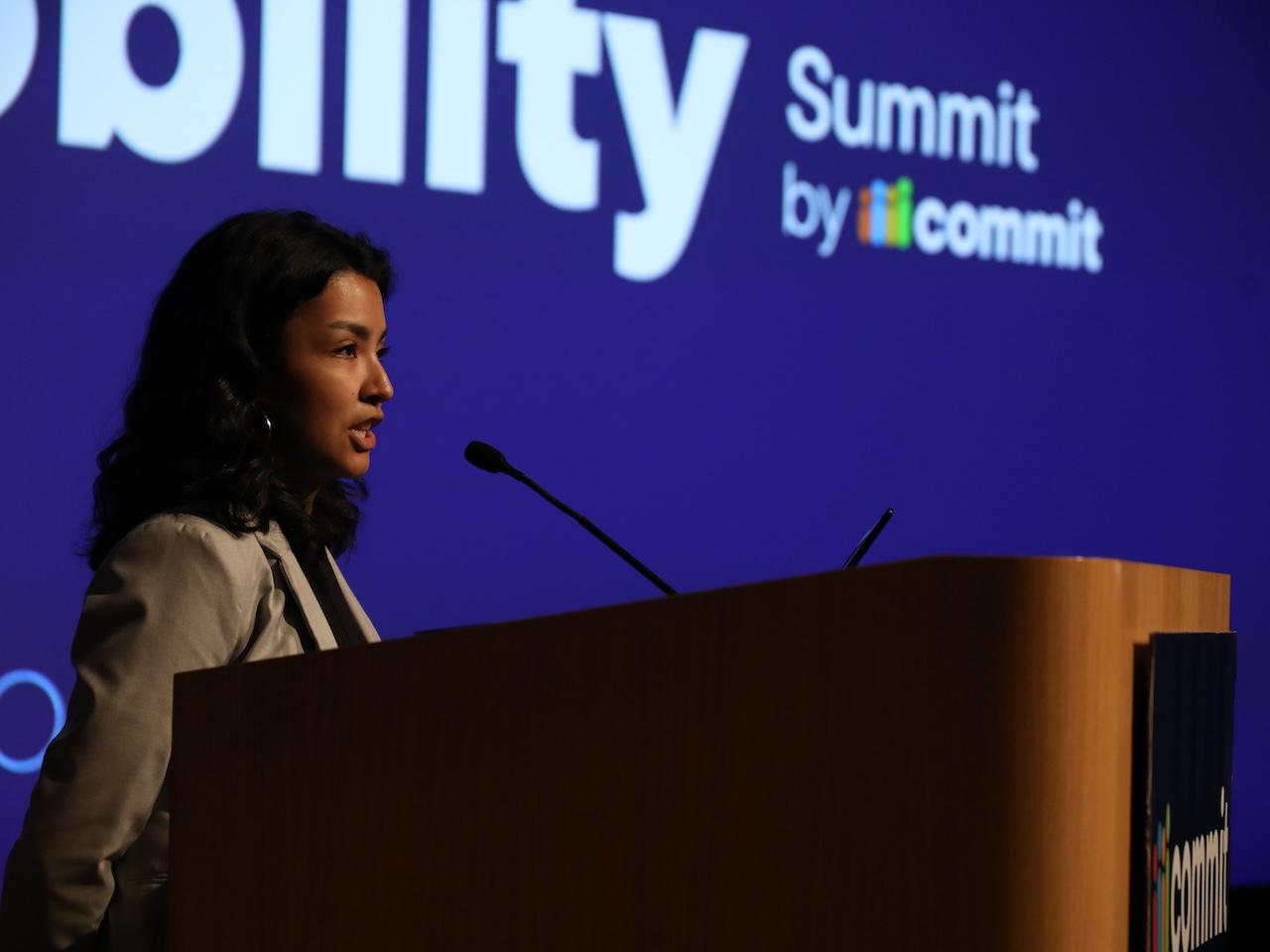
Behind each data point is a story like that of Kamila Vargas-Gonzalez, a Dallas ISD, Dallas College, and SMU graduate whose journey underscores the power of opportunity and support. Raised by a single mother in Bachman Lake, Kamila credits her high school advisor for helping her chart a path to college and a living-wage career. Today, she serves her community through Bachman Lake Together.
“Don’t take my experience as a feel-good story,” Kamila told attendees. “Take it as a reminder that more work needs to be done to liberate our students from poverty and make the promise of postsecondary education and economic mobility truly accessible for all.”
Spotlighting leaders and investors driving systemic changes
That call to action echoed throughout the evening. The Economic Mobility Summit celebrated Catalyst Campuses—schools that rose from a D or F to an A or B rating in just one or two years—highlighting what’s possible when districts strategically staff strong educators, expand high-impact tutoring, and maintain high expectations.
The evening also spotlighted the leaders and investors driving systemic change across the region.
The Effective Governance Award honored local school boards that demonstrated exceptional governance and a sustained focus on student outcomes—trustees who kept achievement at the center of their decision-making and modeled transparency in engaging their communities. Honorees included the boards of Carrollton-Farmers Branch ISD, Cedar Hill ISD, Dallas ISD, DeSoto ISD, and Grand Prairie ISD, whose commitment to data-driven governance continues to strengthen opportunities for students across Dallas County.
The Economic Mobility Champion Awards celebrated philanthropic partners whose long-term investments are fueling regional progress. Blue Meridian Partners was recognized for its founding investment in Opportunity 2040, catalyzing more than $100 million in education-focused philanthropy to improve student outcomes. Dallas College and the Dallas College Foundation were honored for launching the Economic Mobility Center in partnership with Commit and reallocating $10 million to strengthen transfer and degree completion.
Finally, the O’Donnell Foundation received recognition for its historic investments supporting postsecondary success. Building on an initial $60 million commitment to expand the Dallas County Promise, it was announced at the Summit that the O’Donnell Foundation will provide a new $50 million investment to North Texas higher education institutions to strengthen the success of Dallas College transfer students through a Transfer Success Fund and dedicated coaching for Pell-eligible students. The Dallas College Foundation has also pledged an additional $10 million to amplify the impact of this new initiative.
Sustaining the Momentum
As Commit’s Economic Mobility Report makes clear, sustaining this momentum will require continued collaboration and investment across three critical areas: high-quality teaching talent, rigorous instruction, and postsecondary success. From the Dallas County Consortium for Teacher Excellence to the TSI Readiness and Coaching Summits, partners are aligning around proven strategies to ensure every student has access to effective educators, challenging coursework, and pathways to college and career.
By aligning data, partnerships, and community resolve, Dallas County is demonstrating what’s possible when a region commits to shared goals and measurable results.
To explore the full 2025 Economic Mobility Report, click here.
Latest Learnings


Be a part of the impact



.avif)


