Building A Better Higher Education Transfer In North Texas

Nearly 80% of community college students nationally report a desire to ultimately earn a bachelor’s degree – but only around a third successfully transfer to a four-year university.
Unfortunately, for students across Texas and the country, the transfer journey remains one of the most complex, expensive and discouraging parts of higher education. Lost credits, unclear pathways, and inconsistent degree requirements make it difficult for students to stay on track and reach the finish line.
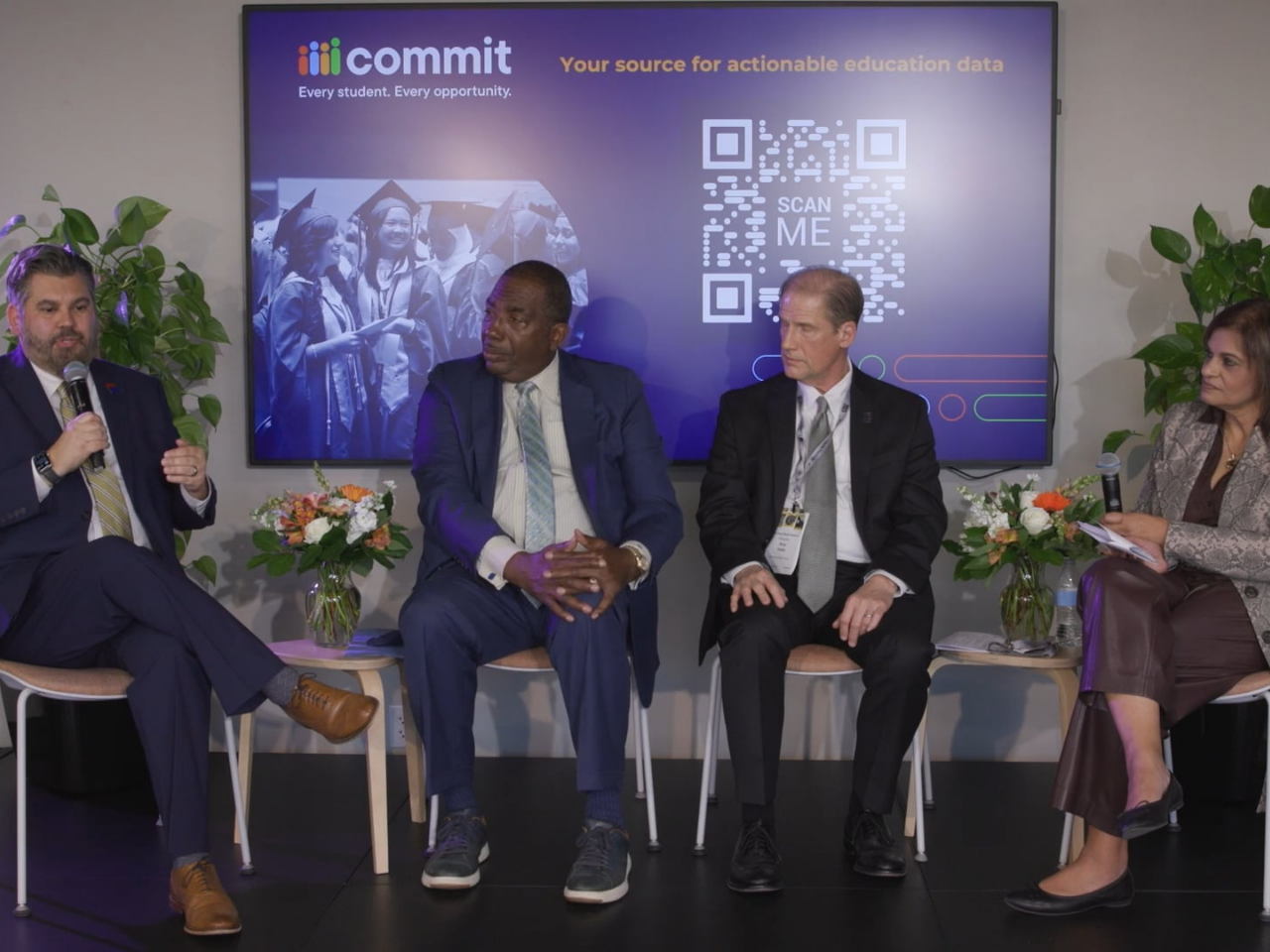
How can policymakers and higher education leaders better support students seeking to transfer from two-year to four-year institutions? This was the topic of a recent panel discussion moderated by Nimisha Savani, founder and CEO of NVision Strategies, at the 2025 Texas Tribune Festival.
The panel featured Dallas College Chancellor Justin Lonon, State Sen. Royce West and East Texas A&M University Senior Vice Provost Ricky Dobbs, who highlighted how the Dallas Transfer Collaborative is setting an example across the state for increasing access to higher education and strengthening pathways to living wage attainment.
“Students don’t have a lot of money, and our institutions don’t need to continue down the wrong path when the goal is student success,” said Sen. West.
The Dallas Transfer Collaborative (DTC) represents one of the most comprehensive and ambitious efforts in Texas to redesign the transfer experience. Through deep collaboration between Dallas College, East Texas A&M University, Texas Woman’s University, UNT Dallas and regional partners, the DTC is tackling long standing issues including misaligned degree requirements, credit loss during transfer, limited transparency in pathway information, inconsistent advising coordination across institutions and confusing student- facing navigation tools.
“We’re in the barrier busting business,” said Chancellor Lonon, as the program is designed to eliminate external challenges that can keep students from accessing higher education.
When transfer systems are designed around institutions, students suffer. The Dallas Transfer Collaborative flips this approach by centering student goals, not institutional convenience. Through clearer degree maps, shared advising tools, aligned pathways and transparent comparison options, students gain the clarity they deserve to make informed decisions about their educational and professional futures.
“We believe this is an opportunity for our students not only not to lose credits, but to be able to look at the [participating] four-year institutions in a way that is easy to compare,” said Dr. Dobbs.
Texas has both the talent and the momentum to lead the nation in transfer innovation. But policymakers, institutional leaders and regional partners must continue working in alignment. With bold leadership, strategic investment and a commitment to collaboration, Texas can build a transfer ecosystem that ensures every student, no matter where they start, has a clear, supported path to postsecondary success and a living wage career.
Want to learn more about the Dallas Transfer Collaborative? The entire panel discussion can be made available upon request, email communications@commitpartnership.org
Latest Learnings


Be a part of the impact



.avif)


