"Forum For the Future of Texas Teachers" Discusses Moving From Data To Action In Educator Preparation
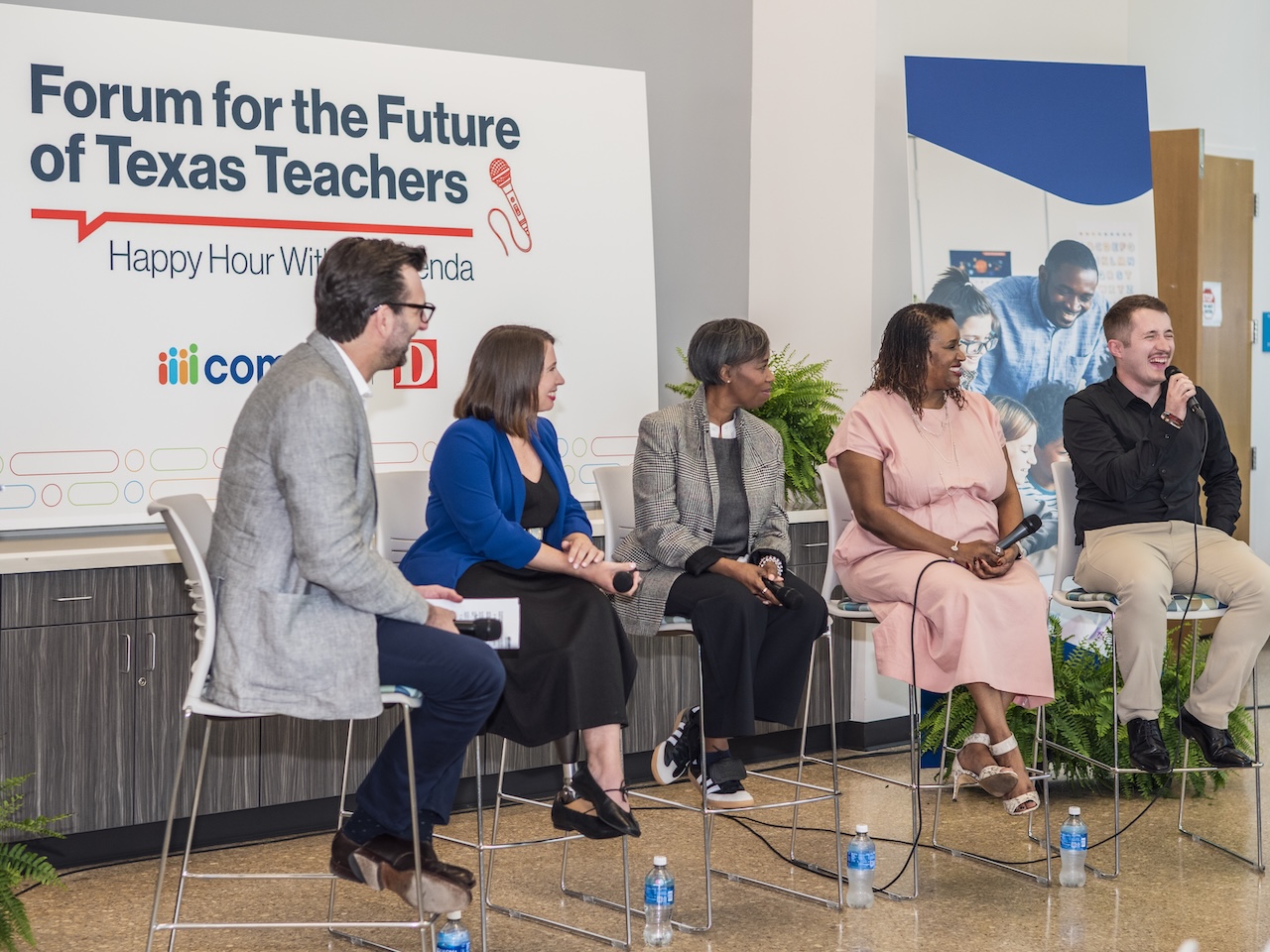

This week, at Dallas College’s West Dallas Center, educators, system leaders, and aspiring teachers came together to mark the release of the Commit Partnership's new report, Getting More Great Teachers In Texas Classrooms. The conversation made one thing clear: while the challenges facing our teacher workforce are real, so is the momentum to solve them.
Across the discussion, panelists brought the report’s findings to life—connecting data to lived experience and highlighting what it will take to ensure every student has access to a well-prepared, well-supported teacher.
Why teachers matter—and why the moment is urgent
Moderator Peter Simek grounded the conversation in a simple but powerful truth: “There’s a lot of research that shows that the absolute number one thing that drives student outcomes is great teachers.”
That idea sits at the center of the report. Teachers are the most important in-school factor influencing student success, yet Texas continues to face persistent challenges in building and sustaining a strong teacher workforce.
The panel reinforced that this is not a question of talent. It is a question of whether our systems make it possible for that talent to enter, succeed, and stay.
Perception is the first barrier
The report identifies perception as the first roadblock to a strong teacher pipeline—and panelists echoed that reality.
Cameron Adams, a teaching assistant at Sylvia Mendez CREW Leadership Academy preparing to lead his own classroom, described what he saw growing up: “In high school… there were teachers that felt burnt out… the perception was really sort of negative.”
That perception matters. As the report notes, fewer than 4% of Dallas County high school seniors express interest in a career in education, despite many students feeling drawn to meaningful work.
But Adams also pointed to the opportunity to change that narrative: “Teaching is hard work, but it’s meaningful… being able to change that perception I think would really help keep great teachers in education.”
Dawn Walker, Deputy Chief of Human Capital Management for the Dallas Independent School District (Dallas ISD) emphasized that changing perception starts with visibility. “We need to demystify all the connotations of teaching… We have amazing teachers and we need to highlight that.”
This aligns directly with the report’s call to reframe teaching as a high-skill, high-impact profession with a clear career arc and significant wage-earning potential—not a fallback option or a sacrificial "calling."
Building clearer, more accessible pathways
Even when students are interested in teaching, the pathway into the profession can be complex. The report highlights preparation and certification as key drop-off points—and panelists described how local partnerships are working to remove that friction.
Dr. Tami Jenkins, Director of Educator Effectiveness at the Commit Partnership, put it simply: “These pathways all exist, they just need to be uncovered.”
That work is happening through stronger collaboration between school systems and educator preparation programs. By aligning efforts and increasing transparency, partners are making it easier for aspiring teachers to see a path forward.
Dallas College is playing a critical role in that effort. Sara DeLano, Dean of Educator Pathways for Dallas College, highlighted how affordability and intentional design can open doors: “Our four-year degree is $12,000… our students who are Pell eligible are getting paid to get their bachelor’s degree.”
This directly addresses one of the report’s key findings: financial barriers during preparation disproportionately exclude strong candidates, especially those balancing work and family responsibilities.
The impact is already visible. Programs like Dallas College’s bachelor’s in education and Dallas ISD’s “letter of intent” initiative are creating clear, supported pathways from high school to the classroom—mirroring the “grow your own” strategies highlighted in the report.
Preparation is a retention strategy
The panel also reinforced a critical insight from the report: how we prepare teachers determines whether they stay.
DeLano emphasized the importance of high-quality preparation, particularly residency models: “The most critical retention strategy for your early career teachers is for them to be well prepared.”
The report underscores this point with data showing that teachers who receive deeper clinical preparation and mentorship are more effective and more likely to remain in the classroom long-term.
Yet today, only a small share of new teachers enter through these high-quality pathways. Recent state investments, including House Bill 2 (89R), aim to change that by expanding access to paid residencies and reducing certification barriers.
Jenkins pointed to the importance of aligning systems to support candidates all the way through certification: “It’s one thing to study, but it’s another thing to go in and feel confident. We’re providing the coaching and the supports to enable them to pass.”
Retention requires more than passion
Even with strong preparation, retention remains a challenge. The report identifies compensation, support, and working conditions as key drivers—and panelists highlighted how those factors show up in practice.
Walker noted that traditional pay structures have long made it difficult for teachers to build financial stability early in their careers. But recent changes are shifting that reality: “Teachers want to have a lifestyle, and we are able to provide very comparable compensation.”
This reflects the growing impact of the Teacher Incentive Allotment, which allows teachers to earn higher salaries based on effectiveness while remaining in the classroom—a major shift highlighted in the report.
But compensation is only part of the story. Jenkins pointed to the importance of career pathways: “That career ladder gave me the option to stay in the classroom but also to support other teachers.”
The report echoes this, emphasizing that teachers are more likely to stay when they see a clear trajectory for growth without leaving instruction.
The role of community and connection
Beyond systems and policy, the panel highlighted something harder to quantify but equally important: belonging.
Walker described how strong school communities can anchor teachers: “This principal saw something in [Cameron]. Now [he's] going to become a teacher… that’s retention in and of itself.”
Adams reinforced that idea, sharing how mentorship and support shaped his journey—and why he plans to stay: “I don’t plan on leaving anytime soon. I am really excited to just get started.”
These stories reflect a broader truth from the report: when teachers feel prepared, supported, and connected to their communities, they are far more likely to remain in the profession.
Turning momentum into lasting change
The conversation closed with a clear call to action. Progress is already underway—through stronger partnerships, new state investments, and innovative local programs—but scaling that progress will require continued alignment.
The report outlines what that looks like: building end-to-end pipelines, expanding high-quality preparation, simplifying certification, strengthening compensation systems, and addressing cost-of-living challenges.
The panel brought those strategies to life. It showed that when we align systems around our students and invest in educators, we can remove the barriers that have long limited the teaching profession.
The question is not whether we can build a stronger teacher workforce. As this conversation made clear, we already know what works.
The question is whether we will scale it—so that every student, in every classroom, has access to a great teacher.
Latest Learnings
.png)


Be a part of the impact



.avif)


